Journal
What it costs to open a Pilates studio in India
Nobody publishes this properly. Franchise portals quote a number with no breakdown, equipment vendors quote machines without interiors, and most people planning a studio discover the real figure about three months in. Here is the actual structure of the cost, line by line.
The short answer: a dedicated reformer studio in India costs between ₹25 lakh and ₹60 lakh to open, before rent deposit.
Most of that spread comes from two decisions — how many reformers, and how finished the room is. Equipment is usually the single largest line.
Why the range is so wide
Two studios of the same size can differ by three times in cost, and it is rarely about being careless with money. It comes down to four choices made early.
- Apparatus count. Six reformers versus ten is a difference of several lakh before anything else is decided. It also sets your revenue ceiling, so it is the one decision worth over-thinking.
- Imported or Indian equipment. An imported reformer can cost three times a well-made domestic one. Indian manufacturing for Pilates apparatus has improved substantially, and most new studios here now buy domestically.
- The condition of the space. A bare shell needs flooring, electricals, plumbing, HVAC and false ceiling. A space that was previously a salon or clinic may need half of that.
- How premium the finish is. Mirrors, lighting, acoustic treatment and joinery are where boutique studios separate from functional ones — and where budgets quietly double.
Where the money actually goes
Before looking at totals, it helps to know what you are budgeting for. These are the lines, roughly in order of size for a studio of six to eight reformers.
- Apparatus. Reformers are the bulk of it, then a Cadillac, Wunda chairs, a ladder barrel and a spine corrector. Quotes vary enormously between domestic and imported, so get three.
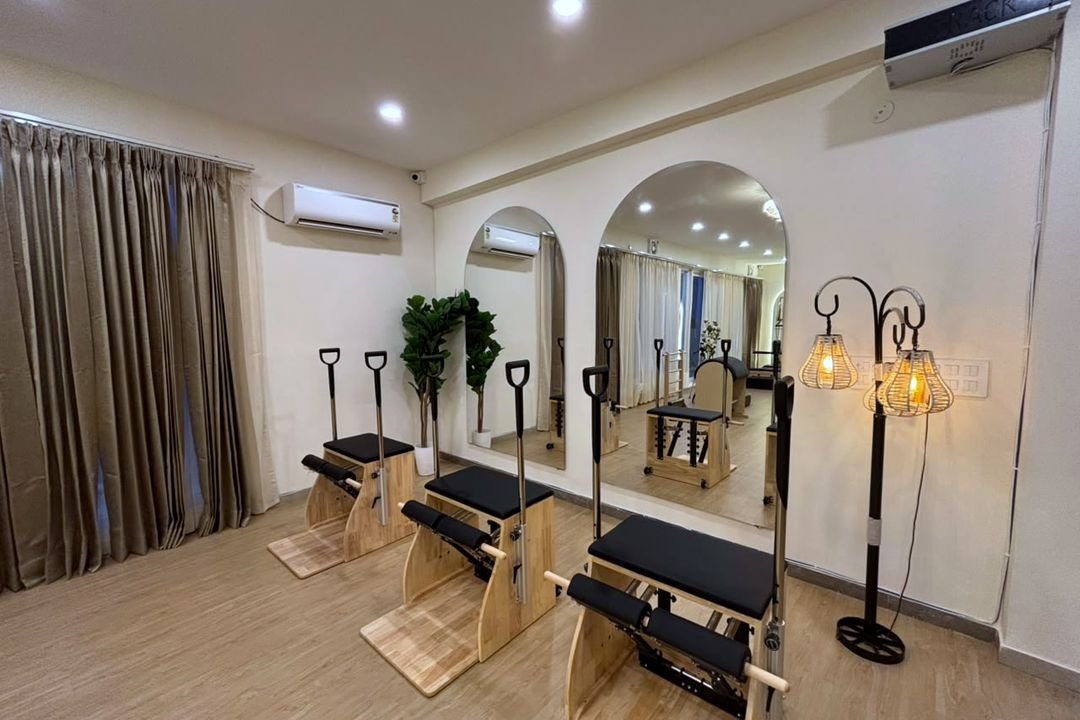
- Interiors and fit-out. Flooring, mirrors, lighting, HVAC, electricals, joinery, reception and a changing area. In a bare shell this frequently rivals the equipment bill.
- Working capital. Three to six months of running costs before the member base covers them. The most commonly underestimated line, and the one whose absence kills studios.
- Pre-launch marketing. The founding member campaign, local partnerships and paid social through the opening months.
- Props and small kit. Mats, rings, bands, blocks, weights, foam rollers, stability balls.
- Branding and signage. Identity, backlit signage, collateral, photography and a website.
- Licences and professional fees. Registration, GST, trade licence, fire NOC where applicable, insurance and your accountant.
Equipment and interiors together usually account for the large majority of the setup. The rest is smaller individually but adds up to more than most first plans allow for.
Three realistic scenarios
Lean independent
₹20–30L Around 1,200 sq ft, four to six reformers, a modest apparatus set, simple fit-out in a space that is already in reasonable condition. Viable, and how a lot of good studios start.Full boutique
₹35–55L 2,000–2,500 sq ft, six to eight reformers plus Cadillac, chairs and barrel, proper interiors, reception and changing area. The format most partners are now building.Premium flagship
₹65L–1.2Cr 3,000 sq ft and up, ten or more reformers, imported equipment, designer interiors in a prime metro location. Commercially viable only where rents and rates both support it.What it costs to run, every month
Setup is the number people fixate on. Running costs are what decide whether the studio survives its first year.
- Rent — the largest fixed cost by a distance. In Delhi NCR expect ₹50,000 to ₹1.6 lakh a month depending on the sector and the floor. A first floor at a good address usually beats a ground floor at an average one, because this is a destination business rather than a walk-in one.
- Instructors — a senior trainer on salary plus a share of private sessions, with part-timers covering peak blocks. Typically your second-largest line, and the one it is most dangerous to economise on.
- Front desk and operations — one person for member handling, bookings, follow-ups and payments.
- Electricity, water, maintenance — air conditioning across a large open room through a north Indian summer is not a small line.
- Software and payments — booking system, accounting, card machine fees of around 2 to 2.5% on card turnover.
- Marketing — ongoing rather than launch-only. Budget for it monthly or the founding cohort becomes the only cohort.
Add these up before signing a lease, not after. For most studios of this size the monthly cost outside rent is comfortably more than first-time owners assume, and it is the figure that determines how long you can stay patient while the member base builds.
The costs people forget
Four lines that reliably appear in month two rather than in the plan.
- Rent during fit-out. Six to eight weeks of rent on a room that is earning nothing. Negotiate a rent-free fit-out period into the lease — 45 to 60 days is a reasonable ask and landlords expect it.
- Security deposit. Commonly three to six months of rent, locked up for the duration. It is not a setup cost in the usual sense, but it is cash you do not have.
- Electrical load upgrade. A studio running multiple air conditioners frequently needs a sanctioned load increase. Check this before signing, not after, because the cost and the timeline both vary enormously.
- Trainer hiring and training time. You pay an instructor for weeks before the studio opens. If you are also funding a certification, add that.
What a franchise costs instead
Pilates franchise investments in India currently range from around ₹30 lakh at the lower end to ₹1.5 crore for the large national brands. The spread reflects studio size, interior specification and, frankly, how much brand premium is priced into the fee.
A franchise is rarely cheaper in pure cash terms, because the fee sits on top. The honest comparison is narrower than cost, and it is this: going independent means solving instructor recruitment, pricing architecture, launch marketing and retention systems yourself, in a format where mistakes take about a year to become visible and cost considerably more than the fee would have.
So the question worth asking of any Pilates franchise is not what it costs. It is what specifically does the fee solve that I would otherwise get wrong? If the answer is a manual and a logo, that is expensive. If it includes recruiting and training your instructor — the thing that most reliably sinks independent studios — the arithmetic changes.
What actually determines whether the money works
Having built one and planned the next, the thing we would tell anyone running these numbers is that the setup figure matters far less than three others.
Rent as a share of revenue. This is the number that decides everything. A studio paying ₹80,000 in a catchment that supports ₹10,000 memberships is a different business from one paying ₹1.6 lakh for the same membership base. Work out what rent your realistic member count can carry before you fall in love with a space.
Prime-slot occupancy, not total capacity. A studio open fourteen hours has far less usable capacity than that suggests, because almost everyone wants 7am or 7pm. Model on prime slots and treat the middle of the day as upside.
Price integrity from day one. The fastest way to destroy a studio's economics is to discount early to fill the room. It works for a quarter and then defines what members believe the service is worth. Holding price while the base builds slowly is harder and almost always correct.
Spend less on the fit-out than you want to, more on the instructor than feels comfortable, and keep enough working capital to be patient for two quarters. That combination survives. The reverse does not, however beautiful the room.
What a Liv studio costs
Liv Pilates partners open for ₹30–40 lakh plus GST, all-in — setup package and franchise fee together, with a 3 km protected territory. We recruit and train your instructor. The terms are published rather than quoted on a call.
See the franchise terms